
What Is TikTok Marketing? An A–Z Guide for Beginners
TikTok has become a marketing channel that helps businesses, online shops, freelancers, and content creators reach customers, build their brands, and drive conversions. However, results do not come from simply posting more videos, following trends, or investing in advertising.
To achieve sustainable growth, you need to connect your objectives, target customers, positioning, content, search, advertising, and measurement within a unified system. To connect content with measurable business goals, start by building a complete TikTok marketing strategy. This article will help beginners understand what TikTok Marketing is and how to implement it across organic content, TikTok SEO, TikTok Ads, TikTok Shop, and Affiliate Marketing.
What Is TikTok Marketing?
TikTok Marketing is the process of using the TikTok platform to reach target customers, communicate messages, build a brand, and encourage actions such as following an account, visiting a profile, sending a message, accessing a website, viewing a product, or placing an order.
This activity is not limited to advertising. A TikTok Marketing strategy may combine organic content, TikTok SEO, Social Search, livestreaming, TikTok Ads, TikTok Shop, Affiliate Marketing, and collaborations with KOCs, influencers, or creators.
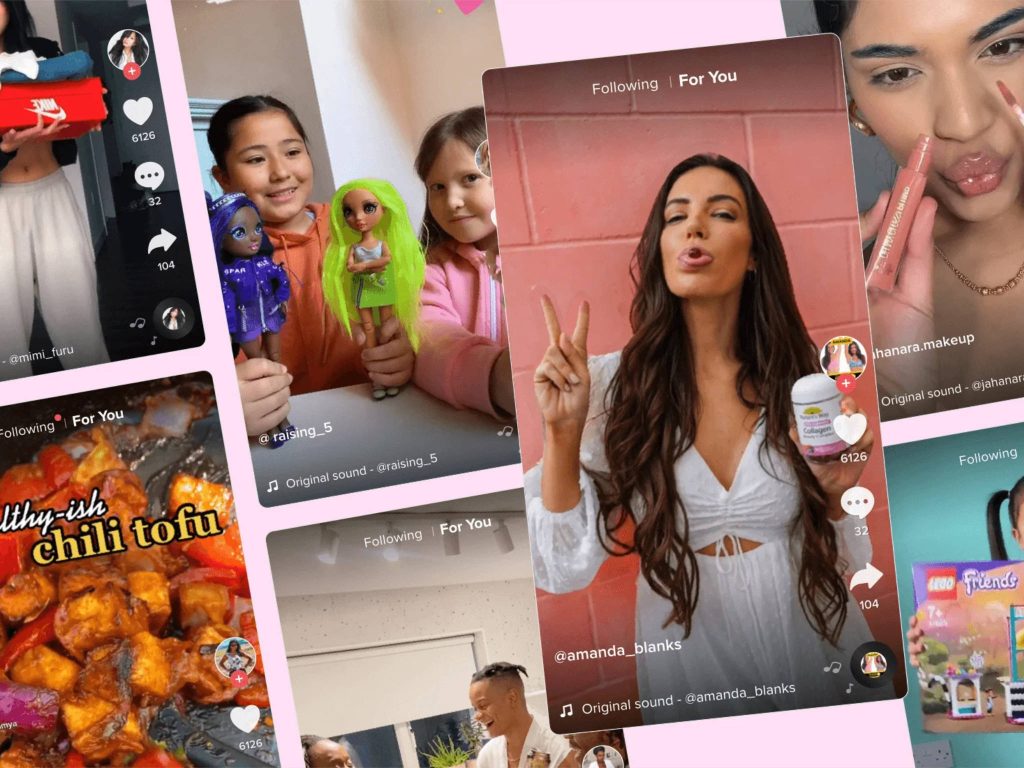
At its core, the system has three layers:
- Attract attention: Help content get discovered through the For You page, search, trends, creators, or advertising.
- Build trust: Demonstrate expertise, product quality, processes, real-world experiences, or brand credibility.
- Drive action: Guide viewers toward the next step, such as following the account, sending a message, viewing a product, visiting a website, or making a purchase.
Therefore, views represent only one part of the outcome. Each video should be evaluated according to its role in the customer journey.
Who Is TikTok Marketing Suitable For?
TikTok is suitable for many business models, provided that their products, services, or expertise can be communicated through video. Online shops can demonstrate products and explain how to use them; businesses can increase brand awareness, educate the market, or share their processes; freelancers can demonstrate their capabilities; and creators can grow communities and generate revenue from products, services, or TikTok Affiliate.
Common Forms of TikTok Marketing
Organic TikTok content
Organic content consists of videos posted naturally without paying for distribution. It provides a foundation for testing topics, messages, formats, and audience responses before expanding through advertising.
Businesses can combine several effective TikTok content formats to attract viewers, build trust, and support conversions. Common formats include tutorials, mistake analyses, comparisons, demonstrations, behind-the-scenes content, case studies, and video replies to comments. Videos should be distributed across three primary purposes: attracting attention, building trust, and driving conversions.
TikTok SEO and Social Search
TikTok is increasingly being used to search for products, places, tutorials, and reviews. TikTok SEO is the process of optimizing videos so that they are more likely to appear when users search for a relevant topic.
Each video should focus on one specific search query. Keywords can appear naturally in the spoken dialogue, on-screen text, and caption. Hashtags should be relevant to the topic, while the content must accurately address the user’s search intent.
Instead of creating a broad video about “fashion tips,” you could focus on “how to choose dresses for petite women” or “workwear styling ideas for women.” The more specific the topic is, the easier it becomes for the video to reach people with the right needs.
TikTok Ads
TikTok Ads can expand reach, increase traffic, attract potential customers, or drive sales. Advertisements can direct users to a profile, website, landing page, registration form, product page, or TikTok Shop.
Advertising is most appropriate when a business has clearly defined objectives, audiences, content, calls to action, and conversion points. TikTok Ads can amplify strong content, but they cannot automatically fix an unconvincing video, a poor landing page, or an unsuitable product.
TikTok Shop and Affiliate Marketing
TikTok Shop allows products to be sold directly through videos, livestreams, creators, affiliates, and advertising. Content should clarify who the product is for, what problem it solves, how it is used, and why people should buy it. At the same time, the product page, price, reviews, and shipping options must be sufficiently persuasive.
TikTok Affiliate Marketing allows creators to introduce sellers’ products and earn commissions when valid orders are generated. Its effectiveness depends on how well the product matches the audience, the quality of the content, the creator’s credibility, the commission rate, and the overall purchasing experience.
KOC, influencer, and creator marketing
Businesses can collaborate with creators to produce content, publish reviews, host livestreams, or reach specific communities.
Partners should not be selected solely based on their follower counts. Audience demographics, channel topics, comment quality, the ability to present products, and alignment with the brand are often more important. A smaller creator operating in the right niche may deliver better results than a larger account targeting the wrong audience.

How Beginners Can Build a TikTok Marketing Strategy
If your business does not yet have a structured account, follow this guide to build a TikTok channel for your business from scratch.
Step 1: Define your objectives
Start with the result you want to achieve, not with a video idea.
Your objective may be to increase brand awareness, grow a community, drive traffic, generate messages, collect leads, sell products through TikTok Shop, or build a personal brand.
Each objective requires its own metrics. A brand-awareness video may be evaluated through views and watch time, while a customer-acquisition video should be assessed using profile visits, clicks, messages, or orders.
Step 2: Identify your target customers
Avoid creating content for “everyone.” Determine:
- Who they are and what problems they are experiencing.
- Which topics they frequently search for.
- What makes them stop scrolling and watch.
- Why they have not made a purchase.
- What evidence they need before they can trust you.
- Whether they prefer to buy through TikTok Shop, a website, or direct messages.
Insights can be collected from TikTok Search, comments, messages, product reviews, sales teams, competitors’ content, and website data.
Step 3: Establish your positioning and optimize your profile
Clear positioning helps viewers understand who the channel is for, what topics it covers, and why they should follow it.
For example:
- Simple styling ideas for female office workers.
- Content creation guidance for small online shops.
- Design mistake analyses and practical solutions.
- Tool reviews for video creators.
Your display name, profile picture, bio, links, and pinned videos should be consistent. Together, they should help viewers understand who you are, what value you provide, and what they should do next.
Step 4: Build your content pillars
A new channel should begin with approximately three content pillars. This helps maintain clear positioning while still leaving room for experimentation.
For example, a fashion shop could focus on outfit coordination, sizing, and materials. A freelance designer could focus on mistake analyses, working processes, and before-and-after results.
Within each pillar, combine:
- Attention-grabbing content: Common mistakes, relatable situations, comparisons, and frequently asked questions.
- Trust-building content: Demonstrations, case studies, processes, customer feedback, and behind-the-scenes content.
- Conversion-focused content: Solution introductions, objection handling, promotional offers, or consultation calls to action.
Step 5: Develop ideas and write scripts
Each video should focus on one main issue. A basic structure includes:
- Hook: Help viewers recognize the problem within the first few seconds.
- Main content: Answer the question or provide a solution.
- Evidence: Present an example, demonstration, result, or real experience.
- CTA: Guide viewers toward the next step.
For example:
- “Three mistakes that give sales videos plenty of views but no orders.”
- “Here is how to choose a phone case if you frequently drop your phone.”
- “How did I revise this design to make its message clearer?”
The hook must relate directly to the main content. Avoid creating curiosity with a promise that the video does not fulfill.
Step 6: Produce and publish videos
Beginners do not need professional cameras. A smartphone, suitable lighting, and clear audio are sufficient for initial testing.
Videos should use a vertical frame, feature a clearly visible subject, include readable text, maintain a pace that removes unnecessary sections, and present an easy-to-understand CTA. Visuals should support the spoken content through demonstrations, screen recordings, B-roll, or real-world examples.
During the early stages, prioritize a streamlined process that is easy to maintain and continuously improve.

Step 7: Measure and optimize
Do not focus only on total views. Analyze:
- Watch time and completion rate.
- Saves, shares, and comments.
- Profile visits and new followers.
- Clicks, messages, or form submissions.
- Product clicks, additions to cart, orders, and revenue.
If a video receives few views, examine its topic, hook, opening scene, and editing pace. If it receives many views but generates no action, review the target audience, CTA, profile, product, and landing page.
After publishing each group of videos, develop new versions of the topics showing positive signals by using different hooks, examples, or formats rather than constantly searching for completely different ideas.
Step 8: Scale through advertising and creators
You can consider TikTok Ads or creator collaborations once your positioning is clear, your profile is optimized, your organic content is generating positive responses, and your conversion points are ready.
In many cases, it is advisable to test organically before committing a large advertising budget. However, businesses with existing customer data, proven content, or time-sensitive campaigns may still launch advertising early with a controlled budget.
TikTok Marketing Metrics to Track
| Objective | Primary metrics |
| Awareness | Views, reach, watch time |
| Retention | Average watch time, completion rate |
| Engagement | Comments, shares, saves |
| Channel growth | New followers, profile visits |
| Traffic | Clicks, CTR, website sessions |
| Lead generation | Messages, form submissions, phone calls |
| Sales | Product clicks, additions to cart, orders, revenue |
| Advertising | CPM, CPC, CTR, CPA, conversion rate, ROAS |
Watch time and retention indicate how effectively a video keeps viewers engaged. CTR represents the percentage of viewers who click, conversion rate shows the percentage who complete an action, CPA is the cost of acquiring one conversion, and ROAS is the revenue generated relative to advertising expenditure.
These metrics should be interpreted as part of the same customer journey. A high CTR combined with a low conversion rate may indicate that the landing page, price, or offer is not suitable.
A 14-Day TikTok Marketing Roadmap
Days 1–2: Build the foundation
- Select one primary objective.
- Identify your target audience and positioning.
- Choose three content pillars.
- Optimize your profile.
- Develop at least 15 video ideas.
Each idea should address one specific problem or answer one specific question.
Days 3–10: Publish test videos
Experiment with tutorials, frequently asked questions, mistake analyses, comparisons, before-and-after content, behind-the-scenes content, or checklists.
Each video should test one hypothesis: whether the topic matches the target audience, whether the hook retains viewers, or whether the CTA generates comments and messages.
Days 11–14: Analyze the data and make adjustments
Identify videos with strong retention, topics that generate many saves, content that drives viewers to the profile, and questions that repeatedly appear. Then create new versions of the content showing positive signals, change the hook, adjust the CTA, and develop it into a series when appropriate.
Practical Examples
A phone accessories shop could use phone case comparisons to attract attention, durability tests and behind-the-scenes packaging content to build trust, and then introduce specific models, bundles, or product-selection guides to generate conversions.
A freelance designer could publish videos about improving layouts, analyzing font-selection mistakes, comparing before-and-after designs, or sharing their working process. This content demonstrates expertise while helping potential customers understand how the freelancer works before making contact.
TikTok Marketing is a system that combines content, search, community, advertising, and conversion. Beginners should start with their customers, channel positioning, content pillars, and organic videos instead of focusing only on views. Based on real data, you can optimize your hooks, scripts, CTAs, profile, and conversion points before scaling through TikTok Ads, TikTok Shop, Affiliate Marketing, or creator collaborations. This approach helps your channel grow systematically and reduces its dependence on a single short-lived viral video.
Read next: Want your videos to reach people who are actively searching for relevant topics? Learn how to optimize your videos for TikTok Search and build sustainable organic traffic.