
What is TikTok Affiliate Marketing? How beginners can do it effectively
TikTok Affiliate Marketing allows creators to earn commissions by promoting products without having to purchase inventory, manage stock, or handle shipping. However, generating orders does not depend on publishing the most videos or choosing products with the highest commission rates. Performance comes from the alignment between the content niche, audience, product, presentation, and quality of the product page.
Beginners should treat TikTok Affiliate as a performance-based content business model. You still need to research products, build trust, test multiple formats, and monitor click-through rates, completed orders, and commissions actually received.
What is TikTok Affiliate Marketing?
TikTok Affiliate Marketing, also known as TikTok affiliate marketing, is a model in which creators promote sellers’ products and earn commissions when their videos, livestreams, or links generate orders that meet the program’s eligibility requirements.
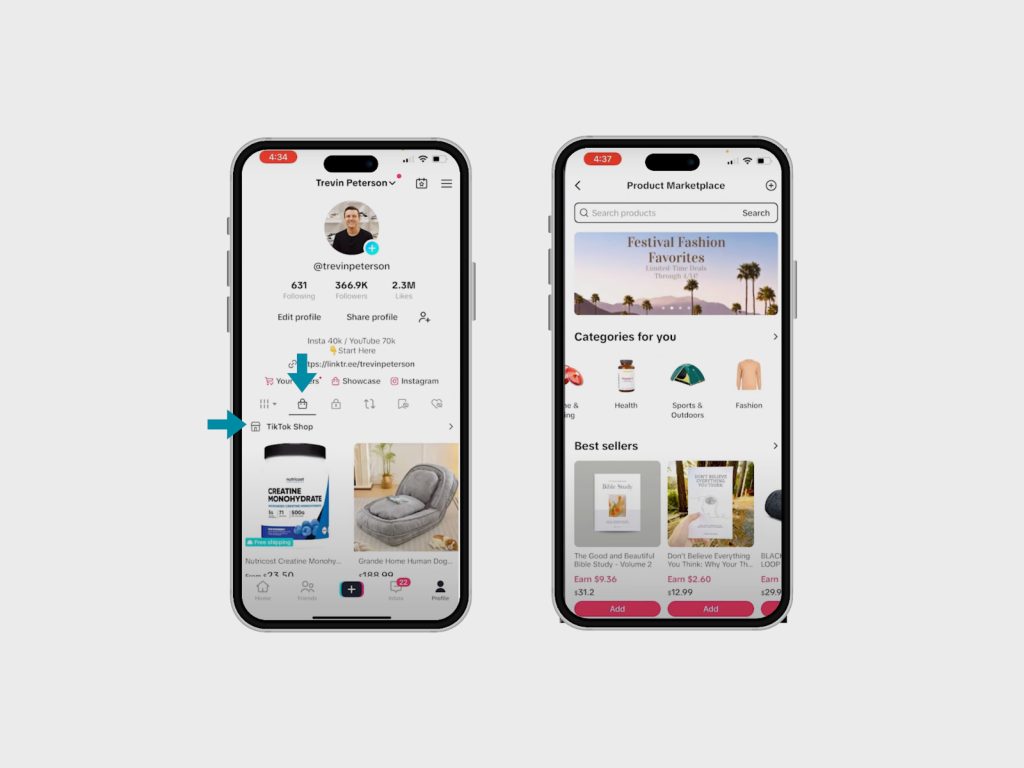
Within TikTok Shop, creators can promote products through product-linked videos, livestreams, Product Showcase, or content collaborations with sellers. Sellers manage inventory and operations, creators produce content, and TikTok Shop tracks eligible orders and commissions.
Affiliate content is one component of a broader TikTok Shop Marketing system that also includes product pages, LIVE sessions, promotions, and advertising.
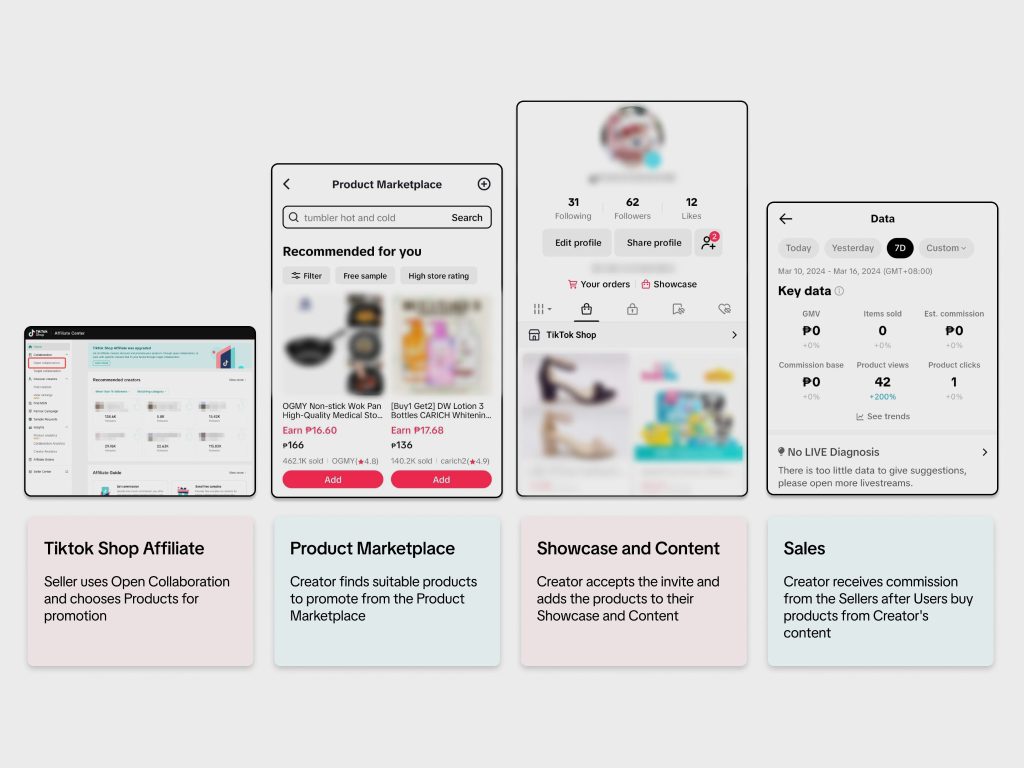
The basic process:
- The seller adds a product to the Affiliate program.
- The creator selects the product or accepts a collaboration invitation.
- The creator links the product to a video, LIVE session, or Showcase.
- The viewer visits the product page and places an order.
- The order is completed according to the platform’s requirements.
- The commission is reconciled and paid.
TikTok Shop Affiliate differs from affiliate marketing through a bio link because users can watch content and make purchases within the same ecosystem instead of leaving TikTok for another platform.
Collaboration and commission mechanisms
Sellers can make products available to multiple creators through Open Collaboration or invite a specific creator through Target Collaboration.
Open Collaboration is suitable for sellers who want to expand their creator network. Target Collaboration is more appropriate for campaigns involving product samples, custom commission rates, or specific requirements. Income depends on the eligible order value, commission rate, and order completion status.
For example, if the eligible product value after discounts is VND 250,000 and the commission rate is 10%, the estimated commission is VND 25,000. However, this is not necessarily the final amount the creator will receive.
Estimated commission may differ from the commission actually received because the buyer uses a voucher, the seller changes the commission rate, the order is cancelled or returned, the product does not meet eligibility requirements, the order is attributed to another source, or reconciliation has not yet been completed.
Eligibility requirements may vary depending on the market, account type, age, follower count, verification status, and compliance history. The safest approach is to check the TikTok Shop or monetization section directly within your own account.
Should beginners do TikTok Affiliate?
TikTok Affiliate is suitable for people who can create content consistently, understand a specific audience, and accept an initial testing period. It is not suitable if you only want to copy videos, select products based solely on commission rates, or expect to earn money quickly. It is not a completely passive source of income.
Step 1: Choose a niche and target audience
An Affiliate channel is easier to grow when viewers clearly understand what the account specializes in. Popular niches include household products, technology accessories, personal care, fashion, office supplies, and video production equipment.
Do not choose a niche solely because it currently has many best-selling products. Consider:
- Do you understand the topic or are you willing to learn about it?
- Is there enough demand to develop the topic over the long term?
- Can you create a variety of content without becoming repetitive?
Instead of creating a channel that “reviews everything,” you could establish more specific positioning:
Space-saving household products for people living in small apartments.
After choosing a niche, identify the inconveniences viewers experience, what prevents them from buying, and what evidence they need to see. The same phone stand may be intended for livestreamers, online learners, or people filming TikTok videos alone. Each group requires a different hook and demonstration.
Step 2: Choose suitable products
Do not focus only on the commission rate. A strong Affiliate product should:
- Match the channel’s topic.
- Have clear demand and be easy to demonstrate through video.
- Have specific differentiating features.
- Be priced appropriately for the target audience’s purchasing behavior.
- Come from a reputable seller.
- Have a clear product page.
- Have reasonably positive reviews.
- Have stable inventory and shipping.
- Have manageable cancellation and return rates.
Before selecting a product, check its name, images, variations, dimensions, negative reviews, price, delivery time, and how the seller responds to customers.
First-hand experience helps creators produce original footage, explain the product’s genuine advantages, and identify its limitations. If you have not used the product, do not pretend that you have.
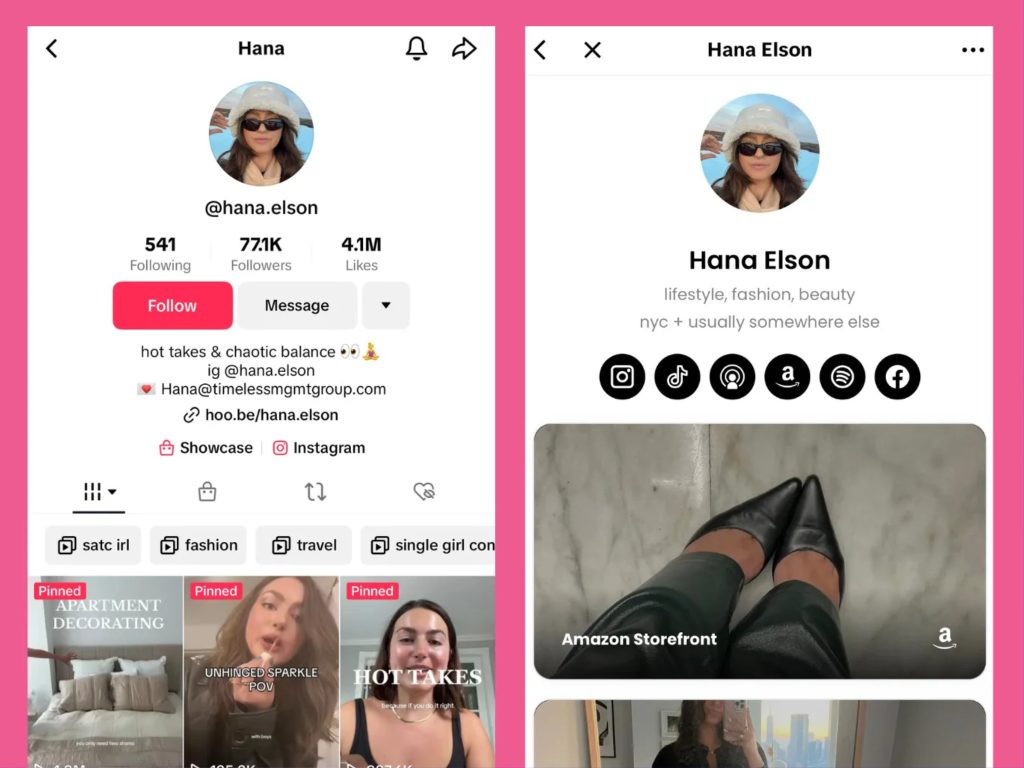
Step 3: Optimize your profile and Showcase
Your profile should help viewers understand the channel’s main topic, who the content is intended for, and where they can find the featured products.
The display name should combine your personal brand with the niche. The bio should describe a specific value proposition, while the Showcase should contain only products that align with the channel’s positioning so viewers can make choices more easily.
Step 4: Build a content system
An Affiliate channel should not simply list features and repeatedly ask viewers to click the product link.
The four essential content categories are demand generation, product explanation, trust building, and conversion. They help viewers recognize a problem, understand how the product works, evaluate evidence, and select the most suitable version or offer.
A channel that publishes only conversion-focused content can feel like constant advertising. Conversely, a channel that only shares tips without connecting them to products will struggle to generate commissions.
Effective Affiliate video formats
Problem-solving videos
The structure includes presenting an inconvenience, explaining its cause, introducing the product as a solution, demonstrating it, and providing a CTA.
For example:
If your charging cables constantly fall underneath the desk, you do not need to replace the entire desk. This clip attaches to the edge, holds several cable ends, and can be removed quickly. The correct product has been linked in the video.
Context-based product reviews
A review should not simply state that a product is good and worth buying. Explain the situation in which you use it, its most useful feature, its limitations, and who it is suitable for.
For example:
This model is suitable for people who film videos at a desk. If you need to film full-body shots or use it outdoors, the stand is relatively short and may not be stable enough.
Comparison and demonstration videos
You can compare two models, two sizes, or a standard version with an upgraded version. The conclusion should clearly explain which situation each option suits:
Choose model A if you need something compact and lightweight. Choose model B if you prioritize stability and long-term use.
Demonstrations are suitable for products with easily observable results, such as suction strength, brightness, dimensions, or foldability. Clearly explain the testing conditions and do not stage misleading results.
Video replies to comments and LIVE sessions
Questions such as “Does it fit a large phone?” or “Can it be used outdoors?” provide content ideas based directly on genuine demand.
LIVE sessions are suitable for demonstrations, comparing several products, answering questions, and providing need-based recommendations. A LIVE session should include a product list, presentation order, demonstration script, common objections, and a clear CTA.
Affiliate video script formula
To connect the hook, demonstration, limitations, and CTA effectively, learn how to write a persuasive TikTok video script.
A video can use a six-part structure:
- Hook: Identify the viewer or problem.
- Problem: Clarify the inconvenience.
- Solution: Introduce the product naturally.
- Demonstration: Show how the product works.
- Limitations: Explain when the product may not be suitable.
- CTA: Direct viewers to the correct product.
Example:
If you film videos alone, this product solves a task that can take a considerable amount of time. Standard tripods take up space and make it difficult to change angles. This model folds compactly and offers several adjustment levels. Here is the angle when filming at a desk and when standing. If you frequently use it outdoors in strong winds, you will still need additional weight to stabilize the base. The correct product version has been linked in the video.
Clearly explaining limitations helps reduce unsuitable purchases and product returns.
Can you do Affiliate Marketing without showing your face?
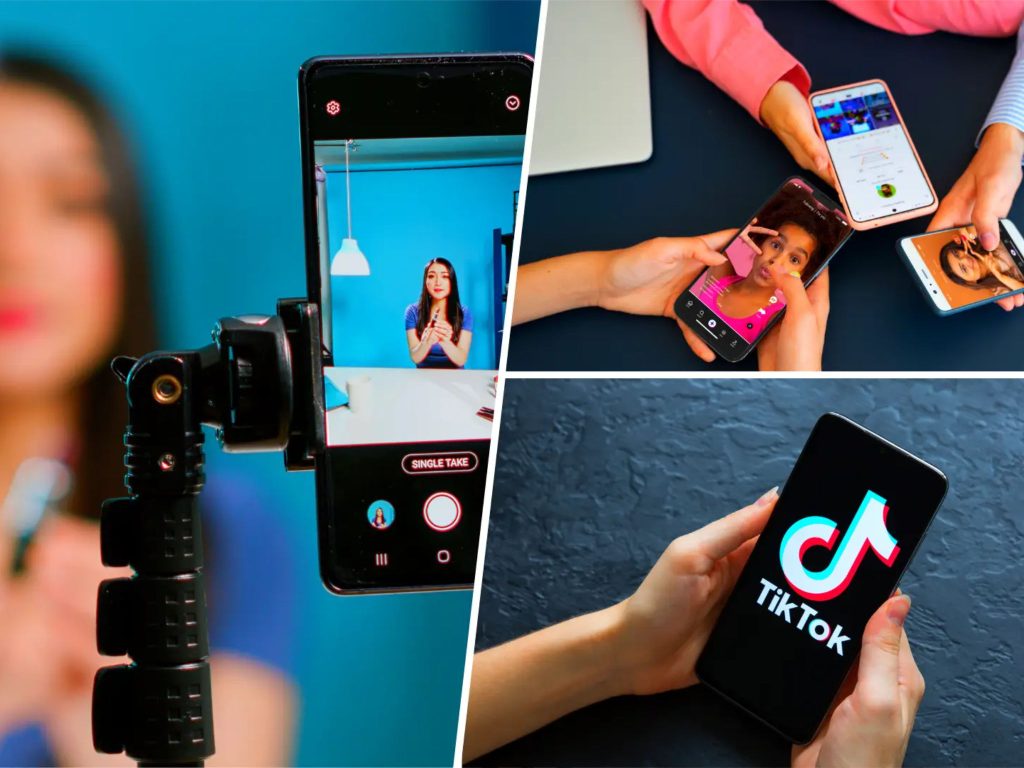
Yes. Creators can film their hands using the product, use voice-over, record close-up product footage, capture their screens, create stop-motion videos, or produce before-and-after content.
However, the content still needs to be original, provide evidence, and deliver new value. Do not repost videos from sellers or other creators without permission.
A faceless channel can still build trust through authentic footage, clear testing methods, and accurate information.
How to increase the order conversion rate
The linked product must be directly relevant to the video. Do not attach numerous products simply because they offer high commissions.
Clearly state who the product is suitable for instead of claiming that “everyone should buy it.” Show its actual dimensions by placing it next to a phone, hand, laptop, or another familiar object.
The CTA should appear after viewers understand the problem, solution, and supporting evidence. Finally, review the product page. A strong video cannot compensate for a poor product page with insufficient images, unclear descriptions, confusing variations, negative reviews, or frequent stock shortages.
Metrics and diagnostic methods
| Stage | Metrics |
| Attraction | Views, new viewers, watch time |
| Retention | Watch time, completion rate |
| Interest | Product clicks, Showcase views |
| Consideration | Additions to cart, purchase-related comments |
| Conversion | Orders, conversion rate |
| Income | Estimated commission, commission actually received |
| Quality | Cancellation, refund, and return rates |
If a video receives many views but few clicks, the topic may be attracting the wrong audience, the product may not be sufficiently relevant, or the benefit may be unclear.
If it receives many clicks but few additions to cart, review the price, ratings, images, variations, and shipping fees.
If it generates many additions to cart but few purchases, the cause may be the total cost, vouchers, delivery time, or level of trust.
If it generates orders but little commission, check the actual amount paid, the applicable commission rate, vouchers, order attribution, and completion status.
Do not evaluate performance solely by the number of orders. A video that generates fewer orders but has a lower return rate and stronger realized commission may be more suitable for long-term development.
A 30-day roadmap
Week 1: Build the foundation
Choose one niche, define the target audience, optimize the profile, research products, and select three to five products to test.
Week 2: Test content
For each product, test problem-solving videos, demonstrations, reviews, comparisons, and FAQs. Monitor views, watch time, clicks, and orders.
Week 3: Develop positive signals
Recreate effective hooks, produce follow-up content, reply to comments, test additional usage scenarios, and remove products with weak product pages.
Week 4: Optimize conversions
Compare commissions actually received, review return rates, select primary products, prepare LIVE sessions, and contact promising sellers.
The objective of the first month is to identify the right combination of niche, product, audience, and content format rather than immediately generating substantial income.
Rules and mistakes to avoid
Content that generates commissions or other commercial benefits should be disclosed using TikTok’s appropriate settings. Creators should also use audio from libraries permitted for commercial content or ensure that they have the necessary usage rights.
Do not exaggerate product benefits, fabricate personal experience, conceal limitations, create false scarcity, or provide inaccurate pricing and policy information. Videos, images, scripts, and audio created by other people should not be copied without permission.
Common mistakes include choosing too many niches, focusing only on commission rates, describing every product as good, linking too many products, publishing in large quantities without analyzing performance, and confusing estimated commission with income actually received.
TikTok Affiliate Marketing allows creators to earn commissions by connecting content with products on TikTok Shop. However, success does not come from selecting products with high commission rates and publishing videos in large quantities.
Beginners should start with a clearly defined niche, understand their audience, and select relevant products. Content should combine demand generation, explanation, demonstrations, reviews, objection handling, and conversion.
By monitoring views, clicks, orders, return rates, and commissions actually received, creators can optimize their approach using real data and build a more stable source of income instead of depending on a single viral video or short-lived product trend.
Read next: Want to reach people who are more likely to consider the products you feature? Learn how to attract more relevant TikTok viewers through stronger topics, hooks, retention, and content positioning.